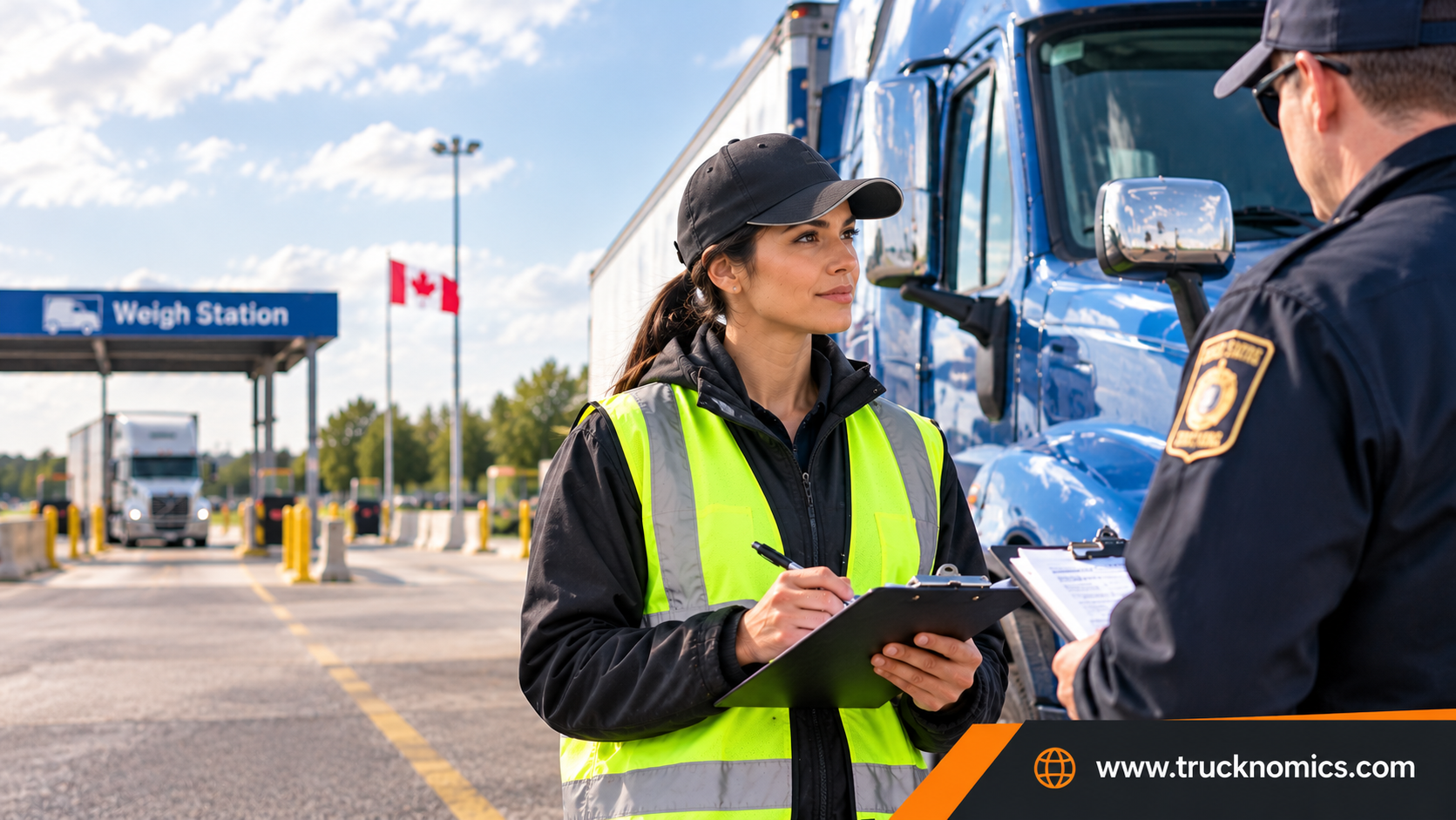
Truck Safety and Compliance Training: A Complete Guide for Fleets
Every carrier knows the feeling. A driver pulls into a weigh station, a safety audit notice lands in the inbox, or a collision report has to be filed within hours. In moments like these, the difference between a calm response and a costly scramble usually comes down to one thing: how well your team has been trained.
Truck safety and compliance training gives drivers, dispatchers and managers the knowledge, paperwork habits and day-to-day discipline to operate legally and safely. It turns compliance from a source of stress into a routine. This guide explains what that training covers, who needs it, how it protects your bottom line, and how to choose the right program for your operation.
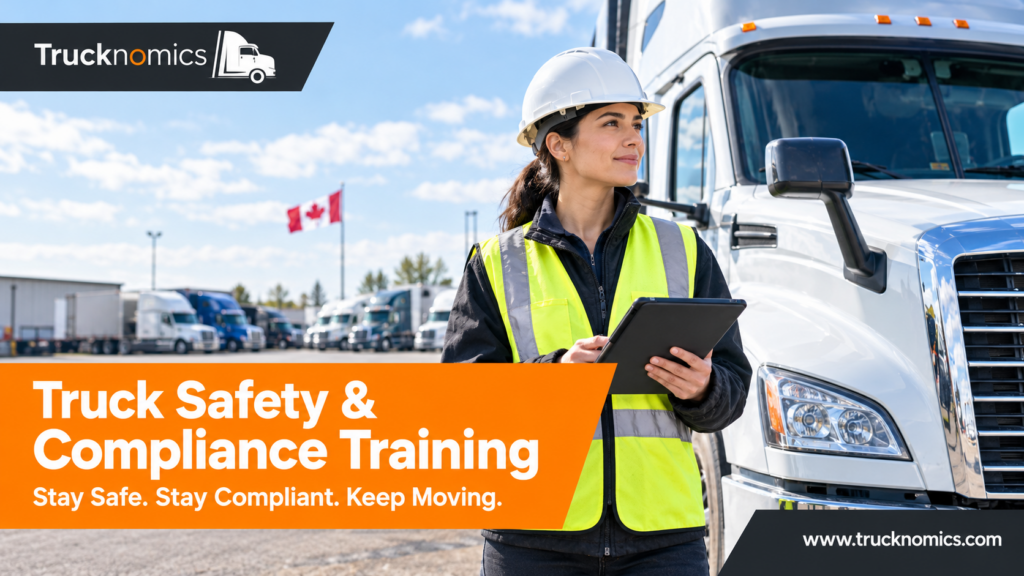
Why Safety and Compliance Cause So Much Stress
Trucking is one of the most heavily regulated industries on the road. Carriers working in Ontario and across the border have to keep up with rules from both the MTO and the FMCSA, and those rules cover everything from how many hours a driver can work to how a vehicle is inspected and how records are stored.
The stress usually comes from three sources:
- Rules that change and differ by jurisdiction. Canadian and US requirements are not identical, and a mistake that is harmless in one system can be a violation in the other.
- Paperwork that is easy to neglect. Missing driver files, incomplete inspection reports and unedited logs often surface only when an auditor asks for them.
- Real consequences. Violations can mean fines, out-of-service orders, higher insurance premiums, damaged safety ratings and lost freight.
The good news is that most of these problems are preventable. They are training problems, not bad-luck problems.
What Is Truck Safety and Compliance Training?
A truck safety and compliance training course is a practical program that teaches drivers and dispatch teams the rules, documentation and best practices required to operate legally and safely. The focus is on real-world situations such as hours of service, vehicle inspections and audit readiness, so that your team reduces violations, accidents and avoidable costs.
The Trucknomics Truck Safety & Compliance Training course is built around this hands-on approach, with checklists, forms, templates and realistic log scenarios rather than theory alone.
Who Needs Safety and Compliance Training?
Compliance is a team effort, so training works best when it reaches everyone who touches the operation:
- Drivers need to understand duty statuses, inspections, log edits and what to do at a roadside stop or after a collision.
- Dispatchers influence compliance every time they plan a load. A schedule that pushes a driver past their available hours creates a violation before the truck leaves the yard. If you are building your dispatch skills, our Truck Dispatch & Freight Broker Training pairs well with safety training.
- Owner-operators carry every responsibility themselves, from records to inspections to audits.
- Fleet managers and safety directors need to build policies, track corrective actions and keep the company audit-ready.
- New carriers setting up for the first time should understand compliance from day one. If you are still getting authority in place, see our US DOT & MC Number Setup service.
For companies that want to train several people at once, our Corporate Training programs can be tailored to your team.
What a Good Safety and Compliance Training Program Covers
A strong program goes beyond a general overview. Look for these core areas.
1. Regulations and Carrier Obligations
The foundation is knowing what the rules require of a carrier: FMCSA and MTO basics, driver and company responsibilities, and how fines and penalties work. Understanding the “why” behind the rules makes it far easier to follow them consistently. If you need hands-on help meeting federal requirements, our DOT Compliance Services can support you.
2. Hours of Service (HOS) and ELDs
Hours of service violations are among the most common and most avoidable problems in trucking. Good training covers duty statuses, exemptions, log edits, violation prevention and reporting, using realistic scenarios for both paper logs and electronic logging devices. To check how clean your records really are, our ELD Logbook Auditing service reviews logs before an inspector does.
3. Vehicle Safety and DVIR
A Driver Vehicle Inspection Report (DVIR) is more than a form. It is the record that proves a vehicle was checked, that defects were reported and that repairs were handled. Training should walk drivers through a full inspection, show how to describe defects clearly and explain how fleets track repairs and preventive maintenance. Fleets that want a structured approach can explore our Fleet Safety Programs.
4. Documentation and Record Keeping
When an audit happens, your records tell the story. Training should cover driver files, vehicle files and drug and alcohol testing records, including what must be kept and how to organize it. Two services that go hand in hand with this topic are our Driver Qualification Files support and our Drug & Alcohol Testing program.
5. Roadside and Facility Audits
Inspectors look for specific things, and teams that know what those are tend to pass with far less stress. Training should explain what to expect at a roadside inspection and at a facility audit, and how to present documents and evidence in an organized way. For Ontario carriers, audit readiness often includes CVOR compliance and NSC audit preparation, both of which we support directly.
6. Incident Reporting and Corrective Action
No program can promise that nothing will ever go wrong, but a prepared team responds better when something does. Good training covers collision procedures, claims handling and root-cause analysis, so each incident leads to a corrective action instead of a repeat.
The Benefits of Truck Safety and Compliance Training
When training is done well, the results show up across the business:
- Fewer violations and fines. Drivers and dispatchers who understand the rules make fewer mistakes.
- Lower accident risk. Consistent inspections and a stronger safety culture help prevent incidents.
- Less downtime. Defects caught early and clean paperwork mean fewer out-of-service delays.
- Reduced insurance exposure. A documented safety program and a clean record put you in a stronger position with insurers.
- Audit confidence. Organized records and a trained team turn audits into routine checks.
- A safer, more accountable culture. Policies, toolbox talks and clear responsibility make safety part of daily work instead of an afterthought.
Training vs. Ongoing Compliance Support
Training builds knowledge, but compliance is an ongoing job. Many carriers combine a training course with continuing support so that standards do not slip once the classroom is over.
If you do not have a full-time safety department, our Safety & Compliance Management service can take on day-to-day tasks, and our wider Compliance Services cover everything from audits to permits.
How to Choose a Safety and Compliance Training Provider
Not all courses are equal. Before you enroll your team, ask these questions:
- Is the content practical? Look for real log scenarios, inspection walk-throughs and templates, not just slides.
- Is it current? Regulations change, so the provider should include recent updates.
- Does it cover both sides of the border? If you run cross-border, you need FMCSA and MTO coverage.
- Are the class sizes small? Smaller groups allow for case studies, role-play and real questions.
- Do you get take-home tools? Checklists, DVIR forms, audit binders and policy templates keep the value going after the course.
- Is there a certificate and ongoing support? Both help you document your training efforts.
- Is the delivery flexible? Online and in-person options make it easier to train drivers with busy schedules.
The Trucknomics Truck Safety & Compliance Training Course at a Glance
Our course is designed for owner-operators, fleet managers, dispatch teams, safety directors and logistics professionals who want practical, audit-ready skills.
- Focus: HOS and ELDs, DVIR, documentation, audits, incident response and safety culture
- Toolkits included: logs, DVIRs, audit binders, SOPs and policy templates
- Format: hybrid, with online classes and in-person training sessions
- Class style: small cohorts with interactive case studies and role-play scenarios
- Certificate: provided on completion
- Price: $700 per participant
- Location: Mississauga, Ontario, with online options
For current dates and schedule options, please contact our team directly.
Frequently Asked Questions
Is truck safety and compliance training required by law?
The training itself is not legally mandatory, but compliance with trucking safety regulations is. A training program helps your company meet FMCSA and MTO requirements, improve safety standards and reduce the risk of violations and penalties.
Does the course include HOS and ELD training?
Yes. The course covers real-world hours of service logbook scenarios, ELD use, exemptions, log edits, violation prevention and compliance reporting.
What is DVIR training?
DVIR training teaches drivers and fleet staff how to carry out vehicle inspections, identify and report defects, manage repairs and keep the records needed for MTO, DOT and compliance audits.
Who should take the course?
It is ideal for owner-operators, fleet managers, dispatch teams, safety directors and logistics professionals responsible for trucking safety and regulatory compliance.
Is the course suitable for both small teams and large organizations?
Yes. The interactive case studies and practical scenarios can be adapted to the size and needs of your operation.
Is the course available online?
Yes. Trucknomics offers a hybrid model with both online classes and in-person sessions.
Final Thoughts: Make Compliance a Habit, Not a Headache
Accidents and audits will never disappear from trucking, but the stress around them can. Teams that understand the rules, keep clean records and know how to respond under pressure spend less time worrying and more time moving freight safely.