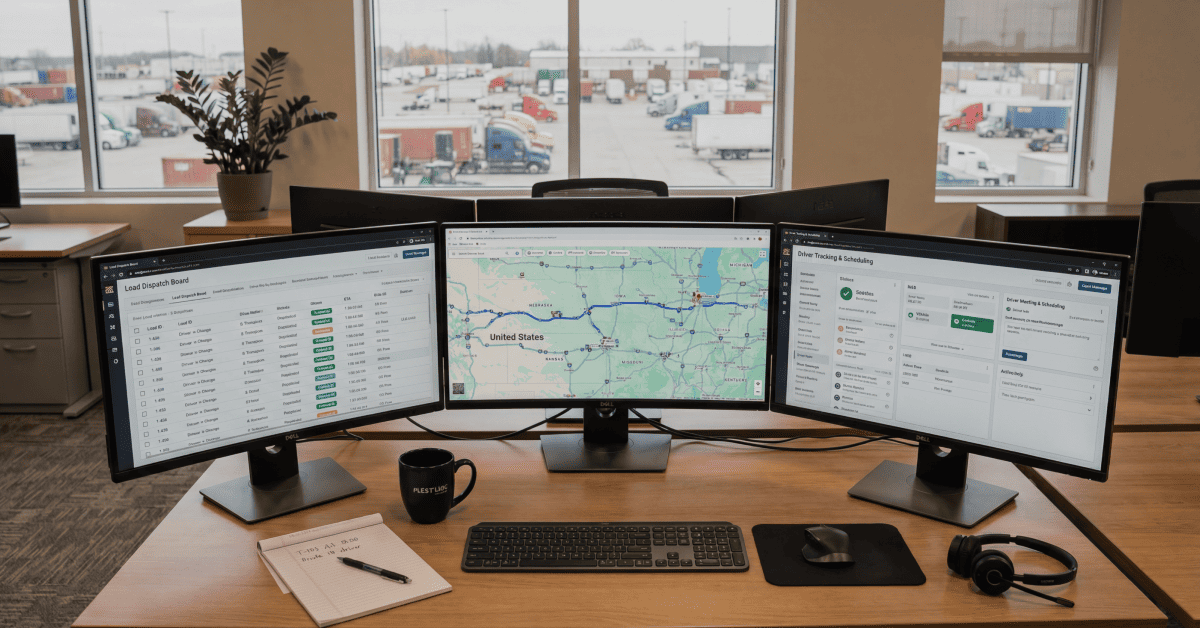
If you’ve spent any time around trucking, you’ve probably heard the term truck dispatcher. Some people think dispatchers just book loads. Others assume they sit behind a desk making a few phone calls.
The reality is very different.
A good truck dispatcher is the backbone of smooth trucking operations. They manage freight, communicate with brokers, solve problems on the fly, and keep drivers moving profitably. Whether you’re an owner-operator in Canada, a small fleet in the U.S., or someone entering the industry, the right dispatcher can directly impact your bottom line.
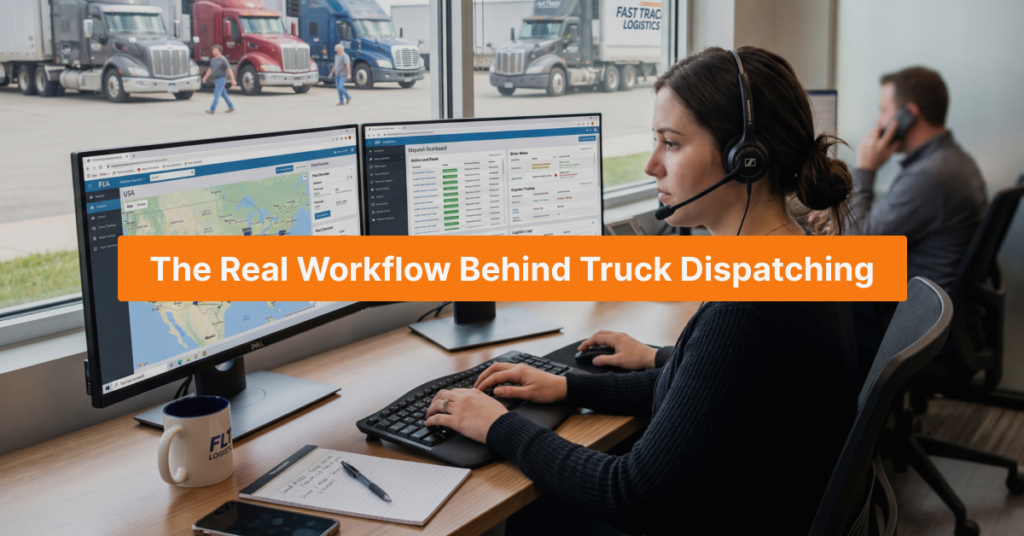
A truck dispatcher manages freight by booking loads, negotiating rates, coordinating drivers, and ensuring on-time delivery—while maximizing profitability and minimizing empty miles.
A truck dispatcher is responsible for planning, coordinating, and managing freight for drivers. Their main goal is simple: keep trucks loaded, moving, and earning.
But that simple goal involves multiple moving parts:
Dispatchers sit right in the middle of drivers, brokers, and customers—and everything flows through them.
At Trucknomics, we see this every day: the difference between a truck that struggles and one that stays consistently profitable usually comes down to dispatch decisions.
No two days are exactly the same, but experienced dispatchers follow a structured workflow. Here’s what a typical day looks like in real North American trucking operations.
The day starts early.
Dispatchers begin by checking:
They also scan load boards and market conditions. Rates can shift daily, especially in volatile lanes such as:
An experienced truck dispatcher doesn’t just grab the first load—they analyze:
This is where real knowledge of freight brokerage and lane strategy comes into play.
This is one of the busiest parts of the day.
Dispatchers start calling brokers and reviewing load boards. The goal isn’t just to book freight it’s to book the right freight.
A strong truck dispatcher will:
Cheap freight is the fastest way to fail in trucking. Many new dispatchers focus on keeping the truck moving—but experienced dispatchers focus on keeping it profitable.
For example, if a broker offers $2.10/mile but the lane usually pays $2.60, a professional dispatcher pushes back or walks away.
This is where experienced dispatch services separate themselves from average ones.
Once a load is booked, the work continues.
Dispatchers:
Mistakes here can cost time and money. Something as small as a wrong appointment time can lead to:
Attention to detail is what keeps operations smooth.
This is where dispatching becomes real work.
Things don’t always go as planned:
A truck dispatcher acts as a real-time problem solver.
Examples:
From training hundreds of real dispatch scenarios, one thing is clear: the ability to solve problems under pressure is what defines a professional dispatcher.
Experienced dispatchers always think one step ahead.
Before the day ends, they:
This is where profitability is built.
A truck sitting empty is losing money. A truck with a planned reload is running like a business.
Not all dispatchers operate at the same level.
In real trucking operations, dispatching is not just about booking loads—it’s about making strategic decisions that impact profitability every day.
On a typical day, experienced dispatchers:
This is where real knowledge of freight brokerage and lane strategy comes into play.
At Trucknomics, this approach comes from decades of experience in North American freight markets. The focus is never just on keeping trucks moving—it’s on positioning them for consistent, profitable freight.
Most dispatchers focus on activity.
Professional dispatchers focus on strategy.
Trucking doesn’t stop at 5 PM.
Depending on the operation, dispatchers may still:
In real trucking operations, dispatching is tied to freight movement—not office hours.
Not everyone is suited for this role.
A strong truck dispatcher needs:
You can’t learn dispatching just by watching videos. Real skill comes from handling actual loads, real brokers, and real problems.
Many new carriers underestimate dispatching—but the results show quickly.
After working with real carriers across Canada and the U.S., one pattern is clear: poor dispatching leads to inconsistent income.
Here’s why dispatchers matter:
1: They Directly Impact Revenue
Better loads = stronger rates = higher weekly gross.
2: They Reduce Empty Miles
Smart planning minimizes deadhead and increases efficiency.
3: They Protect Drivers’ Time
Dispatchers handle calls, paperwork, and scheduling so drivers can stay focused on the road.
4: They Prevent Costly Mistakes
Missed appointments, bad brokers, and poor routing decisions can cost thousands.
5: They Provide Stability
Consistent freight planning leads to predictable income.
Dispatchers aren’t just support—they are a core part of successful trucking operations.
This is one of the most misunderstood areas in trucking.
Work directly with carriers and owner-operators.
They:
Works with shippers.
They:
Understanding this difference helps carriers choose the right business model and support system.
Not all dispatch services deliver real value.
Here’s what separates professional dispatchers:
A dispatcher focused only on “keeping the truck moving” without considering rates and strategy is a red flag.
To understand the role fully, look at the daily challenges:
These are not rare problems—they are part of everyday trucking operations.
Yes—but only for those who can handle responsibility and pressure.
Dispatching offers:
With proper training and real-world exposure, it can become a long-term career in North America.
1: Do truck dispatchers need a license?
No. However, knowledge of regulations, HOS rules, and trucking operations is essential.
2: How Do Dispatchers Get Paid?
Dispatchers are paid differently depending on whether they work independently or as part of a trucking company.
Independent dispatch services typically charge:
This model is common for owner‑operators and small fleets who outsource dispatching.
Company-employed dispatchers are paid through more traditional structures, such as:
Senior dispatchers and operations leads often receive:
This pay structure is standard across both Canada and the USA, depending on experience, workload, and company size.
3: Can an owner-operator work without a dispatcher?
Yes, but it requires time and experience. Many prefer dispatchers to focus on driving and revenue.
4: What’s the difference between a dispatcher and a fleet manager?
A dispatcher manages daily freight, while a fleet manager oversees broader operations like maintenance and compliance.
5: How many trucks can one dispatcher handle?
Typically 3–8 trucks for high-quality dispatch services.
A truck dispatcher is much more than someone booking loads. They are planners, negotiators, and problem-solvers who keep trucking operations running efficiently.
For owner-operators and small fleets across Canada and the USA, the right dispatcher can be the difference between inconsistent income and a stable, growing business.
Copyrights 2025. All Rights are Reserved by Trucknomics
Developed by Digify SEO Company
Trucknomics Dispatch and Brokerage
Typically replies within minutes
Hi,
How can I help you?
WhatsApp Us
Online | Privacy policy
WhatsApp us