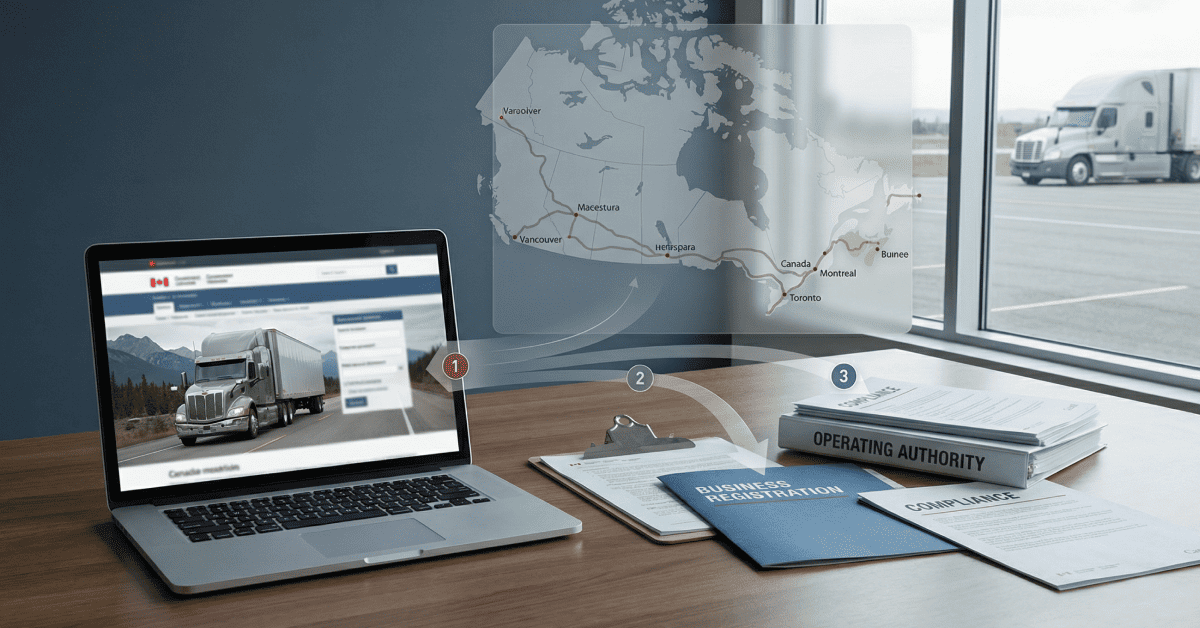
Quick Summary

How to legally start a trucking company in Canada – CVOR, operating authority, and compliance requirements – Trucking insurance costs and permits – Realistic startup cost breakdown – Common mistakes new trucking companies must avoid

Starting a trucking company in Canada can be highly profitable if done the right way. However, many new carriers fail within the first year due to poor planning, compliance issues, and lack of market knowledge.

This step-by-step guide explains exactly how to start a trucking company in Canada, including licensing, insurance, CVOR, operating authority, startup costs, and common mistakes to avoid.

Whether you want to become an owner-operator or build a fleet, this guide is designed for beginners and serious investors.
Trucking Company

Step 1: Decide the Type of Trucking Company

Before registering anything, decide what type of trucking business you want to operate:

  • Owner-Operator (1 truck)
  • Fleet Owner (2 or more trucks)
  • Local trucking
  • Regional trucking
  • Long-haul trucking
  • Cross-border (Canada–USA)
Equipment Type
  • Dry Van
  • Reefer (Refrigerated)
  • Flatbed
  • Power Only

Your choice impacts insurance cost, authority requirements, permits, and profitability.

Step 2: Register Your Trucking Business in Canada

You must legally register your business.

Business Structure Options
  • Sole Proprietorship (low cost, higher personal risk)
  • Corporation (recommended for growth and liability protection)
Registration Requirements
  • Register business name provincially
  • Obtain Business Number (BN) from CRA
  • Open GST/HST account

This step is mandatory before applying for CVOR or permits.

Step 3: Apply for CVOR (Commercial Vehicle Operator’s Registration)

CVOR is mandatory for all trucking companies operating commercial vehicles in Canada.

Where to Apply
  • Ontario: Ministry of Transportation (MTO)
  • Alberta: Alberta Transportation
  • British Columbia: National Safety Code (NSC)
Documents Required
  • Business registration
  • Driver abstract
  • Safety history (if applicable)

Processing time usually takes 5–15 business days.

Step 4: Get Operating Authority

Intra-Provincial Authority
  • If operating within one province, CVOR may be sufficient.
Inter-Provincial Authority
  • To operate across provinces, you need: – National Safety Code (NSC) – Safety Fitness Certificate
Canada–USA Cross-Border Authority
  • For US operations, you must obtain: – USDOT Number – MC Authority – Unified Carrier Registration (UCR) – IRP (International Registration Plan) – IFTA (International Fuel Tax Agreement) – ACE & ACI registration

Missing any of these can result in fines or shutdown.

Step 5: Get Trucking Insurance in Canada

Insurance is the largest startup expense.

Required Coverage
  • $1–2 million Commercial Liability
  • Cargo Insurance ($50,000–$250,000)
  • Physical Damage Coverage
Average Insurance Cost
  • New trucking companies: $18,000–$35,000 per year

Many brokers decline first-time carriers, so choose an experienced trucking insurance broker.

Step 6: Register for IFTA and IRP

If you operate outside your province:

  • IFTA: Fuel tax reporting
  • IRP: Apportioned license plates

Both registrations are handled through your home province.

Step 7: Buy or Lease a Truck

Buying a Truck
  • Lower monthly cost
  • Higher maintenance risk
Leasing a Truck
  • Easier approval
  • Higher long-term cost

Additional equipment required: – ELD (Electronic Logging Device) – Dash camera – GPS – Safety equipment

Step 8: Compliance and Safety Setup

  • Compliance is not optional.
  • You must maintain: – Driver qualification files – Vehicle maintenance records – Daily ELD logs – Hours of Service records – Drug & alcohol testing (for US operations)
  • Most new carriers fail audits due to poor compliance.

Step 9: Open Business Accounts

  • You should set up: – Business bank account – Fuel cards – Factoring company (optional) – Load boards (DAT, Truckstop)

Step 10: Find Loads and Start Operations

  • Loads can be secured through: – Load boards – Freight brokers – Direct shippers – Long-term contracts
  • Profitability depends on lane selection, rate negotiation, and dispatch strategy.

Startup Cost to Start a Trucking Company in Canada

Expense

Estimated Cost

Registration & permits

$2,000 – $4,000

Insurance down payment

$5,000 – $10,000

Truck purchase

$40,000 – $90,000

Plates & permits

$3,000 – $5,000

Working capital

$10,000+

Total

$60,000 – $120,000

Common Mistakes New Trucking Companies Make

  • Starting without proper authority
  • Choosing cheap insurance
  • Poor compliance management
  • Running unprofitable lanes
  • Dispatching without market knowledge

Final Thoughts

Starting a trucking company in Canada requires proper planning, compliance, and market understanding. Those who invest in the right setup and education build sustainable and profitable operations.

If you’re serious about starting trucking the right way, Trucknomics offers hands-on training in dispatching, compliance, and cross-border operations.